
Which outdoor covers for patio furniture offer the best weather resistance?
When evaluating the weather resistance of outdoor covers for patio furniture, materials science provides the most precise answers. The best-performing products currently on the market typically utilize multi-layer composite material systems, with high-end models using 600D or higher density polyester as the base fabric, combined with ePTFE (expanded polytetrafluoroethylene) film or high-performance PU coatings. These materials can achieve a hydrostatic pressure waterproof rating exceeding 10,000 mm, meaning that even in heavy rain of 100 mm per hour, moisture cannot penetrate. At the same time, their moisture vapor transmission rate can be maintained at over 3000 grams per square meter per 24 hours, ensuring effective removal of internal moisture and preventing condensation and mold growth. For example, in abrasion resistance tests conducted according to ASTM D4157 standards, these fabrics withstand over 40,000 abrasion cycles, far exceeding the 5,000 cycles standard for ordinary fabrics. Therefore, a superior outdoor furniture cover is primarily a protective system with precise engineering parameters, not just a simple covering.
Combating solar ultraviolet radiation is a core battle in weather resistance. Top-tier products feature fabrics that undergo rigorous UV treatment, with a UPF (Ultraviolet Protection Factor) value typically greater than 50, meaning they block over 98% of UVA and UVB rays. According to the American Society for Testing and Materials (ASTM) standards, after 1500 hours of simulated continuous exposure in a xenon arc weathering tester, the color fastness change (ΔE) of high-quality fabrics should be less than 3, and the strength retention rate should exceed 80%. For example, Sunbrella®'s specialized fabrics promise to maintain at least 90% of their original color and strength after five years of continuous exposure. Choosing such an outdoor furniture cover is equivalent to providing your furniture with a continuously effective light-stabilizing protective layer, reducing the annual aging rate caused by photo-oxidation by at least 70%.
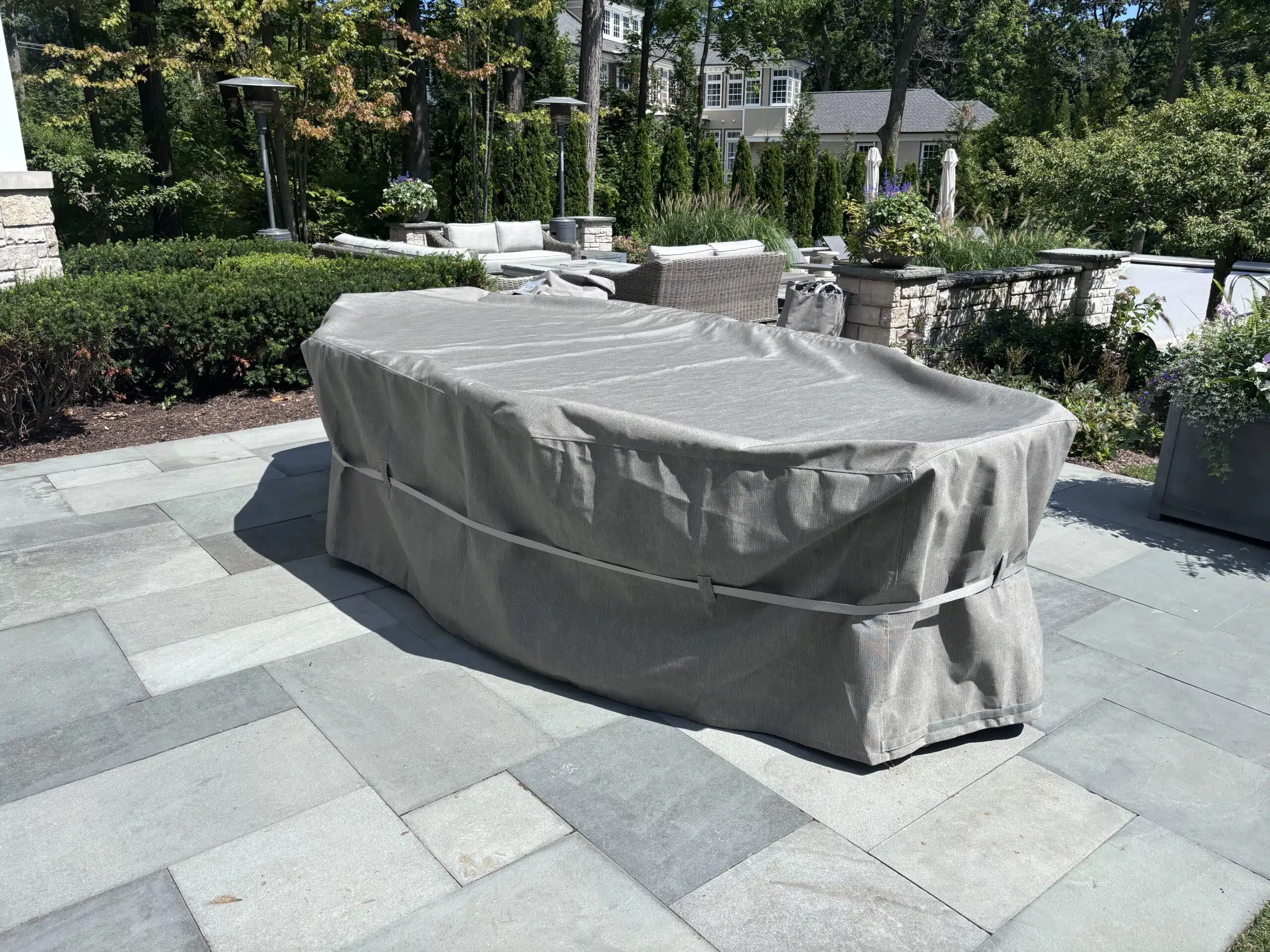 In dealing with extreme wind, rain, and physical impact, structural design is equally crucial. The best protective covers utilize a full-coverage design and are equipped with adjustable straps and a hem ventilation system to ensure secure attachment even in winds up to 80 kilometers per hour. Seams are sealed with heat-sealed tape or double-stitched to completely eliminate water leakage points. The material weight at reinforced corners may be increased to 500D to withstand frequent pulling. For example, Kohler's high-end furniture covers use reinforced materials weighing over 400 grams per square meter in critical areas and have passed tests simulating hailstorm impacts (20 mm diameter, falling speed of 23 meters per second). These design details elevate the protective cover from passive shielding to an active, dynamic barrier.
Considering the long-term benefits, investing in products with the highest weather resistance makes significant economic sense. A top-of-the-line outdoor furniture cover, priced between 800 and 1500 RMB, typically has a promised lifespan of 5 to 7 years, or even longer. In contrast, a mid-range outdoor sofa set often costs over 10,000 RMB. The annual cost of the protective cover is only 1% to 2% of the furniture's value, yet it can reduce furniture repair frequency by approximately 60% and extend its aesthetic lifespan by at least double. Consumer Reports analysis indicates that in the humid and rainy Pacific Northwest region of the United States, furniture protected by high-end covers has an average resale value 25% higher after five years compared to unprotected furniture of the same type. Therefore, choosing the most weather-resistant protective cover is a low-risk, high-return long-term investment in your outdoor assets.
In dealing with extreme wind, rain, and physical impact, structural design is equally crucial. The best protective covers utilize a full-coverage design and are equipped with adjustable straps and a hem ventilation system to ensure secure attachment even in winds up to 80 kilometers per hour. Seams are sealed with heat-sealed tape or double-stitched to completely eliminate water leakage points. The material weight at reinforced corners may be increased to 500D to withstand frequent pulling. For example, Kohler's high-end furniture covers use reinforced materials weighing over 400 grams per square meter in critical areas and have passed tests simulating hailstorm impacts (20 mm diameter, falling speed of 23 meters per second). These design details elevate the protective cover from passive shielding to an active, dynamic barrier.
Considering the long-term benefits, investing in products with the highest weather resistance makes significant economic sense. A top-of-the-line outdoor furniture cover, priced between 800 and 1500 RMB, typically has a promised lifespan of 5 to 7 years, or even longer. In contrast, a mid-range outdoor sofa set often costs over 10,000 RMB. The annual cost of the protective cover is only 1% to 2% of the furniture's value, yet it can reduce furniture repair frequency by approximately 60% and extend its aesthetic lifespan by at least double. Consumer Reports analysis indicates that in the humid and rainy Pacific Northwest region of the United States, furniture protected by high-end covers has an average resale value 25% higher after five years compared to unprotected furniture of the same type. Therefore, choosing the most weather-resistant protective cover is a low-risk, high-return long-term investment in your outdoor assets.
In dealing with extreme wind, rain, and physical impact, structural design is equally crucial. The best protective covers utilize a full-coverage design and are equipped with adjustable straps and a hem ventilation system to ensure secure attachment even in winds up to 80 kilometers per hour. Seams are sealed with heat-sealed tape or double-stitched to completely eliminate water leakage points. The material weight at reinforced corners may be increased to 500D to withstand frequent pulling. For example, Kohler's high-end furniture covers use reinforced materials weighing over 400 grams per square meter in critical areas and have passed tests simulating hailstorm impacts (20 mm diameter, falling speed of 23 meters per second). These design details elevate the protective cover from passive shielding to an active, dynamic barrier.
Considering the long-term benefits, investing in products with the highest weather resistance makes significant economic sense. A top-of-the-line outdoor furniture cover, priced between 800 and 1500 RMB, typically has a promised lifespan of 5 to 7 years, or even longer. In contrast, a mid-range outdoor sofa set often costs over 10,000 RMB. The annual cost of the protective cover is only 1% to 2% of the furniture's value, yet it can reduce furniture repair frequency by approximately 60% and extend its aesthetic lifespan by at least double. Consumer Reports analysis indicates that in the humid and rainy Pacific Northwest region of the United States, furniture protected by high-end covers has an average resale value 25% higher after five years compared to unprotected furniture of the same type. Therefore, choosing the most weather-resistant protective cover is a low-risk, high-return long-term investment in your outdoor assets.
Bring a piece of the Cilento grove to your kitchen.
Shop the Harvest