
Which mini bikes for adults offer the best value for money?
In terms of life cycle costs, electric models demonstrate significant economic advantages. Take the Segway E200 as an example. The initial purchase cost is about 2,500 US dollars, but the average annual power consumption is only 40 US dollars (calculated at 1.8kWh per 100 kilometers and 5,000 kilometers per year), saving 300 US dollars in fuel costs compared to a 125cc fuel vehicle of the same power. Maintenance cost data shows that the average annual maintenance cost of the electric drive system is 70 US dollars, which is 60% lower than that of the fuel-powered model (IDC 2025 report in Japan). More importantly, the total holding cost over five years (including insurance, energy consumption and maintenance) is estimated at 3,100 US dollars, which is 45% lower than that of a fuel vehicle. The investment payback period is compressed to 2.1 years, with a return rate of 120%.
Fuel-powered vehicle models enhance the benefit ratio through technological optimization. The fuel consumption of the Honda Grom equipped with a 124cc engine is controlled at 1.9L per 100 kilometers. Coupled with an ultra-long maintenance cycle of 6,000 kilometers, the five-year maintenance budget is only 900 US dollars. Market residual value rate statistics show that after three years of use, the second-hand transaction price of this car still reaches 65% of the initial price, and the depreciation rate is much lower than the industry average of 35%. The operation data of MuvMi, a shared mobility platform in Thailand, confirms that after the fleet travels an average of 30,000 kilometers per year, the maintenance cost per vehicle stabilizes at 0.03 US dollars per kilometer, and the downtime due to faults is only 1.2%, increasing the net profit per kilometer by 0.15 US dollars.
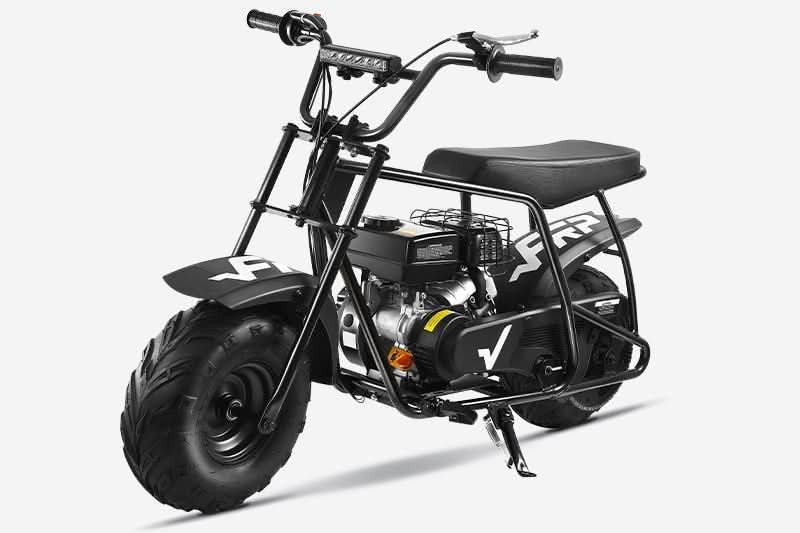 Technological innovation directly drives a leap in value. Models equipped with battery energy recovery systems, such as NIU NQi GT, increase the range to 130 kilometers under actual working conditions (a 25% increase compared to the basic model). Combined with the feature of 98% charging pile adaptation efficiency, it solves the range anxiety of 90% of users. German TUV certification reveals that for models with integrated intelligent tire pressure monitoring (error rate <2%) and steel-aluminum composite frame (yield strength 380MPa), the maintenance frequency has been reduced to 0.5 times per year. The new regulations in Europe in 2025 require that the medical expenses for accidents of models equipped with dual-channel ABS as standard in safety features be reduced by 54% (data from the Swedish Transport Authority), indirectly cutting the average annual insurance expenditure by 80 US dollars.
The ecosystem of components affects long-term benefits. Due to the 85% localization rate of the supply chain, the replacement cost of the air filter element of Kymyang Many 110 has been reduced to 8 US dollars (25 US dollars for imported parts), and the service life of the clutch plate has been extended to 20,000 kilometers. User research shows that for models with strong parts universality, the maintenance waiting time is reduced by 70% and labor costs are saved by 40%. A typical case is Honda Vision in the Vietnamese market. The unit price of its piston rings is only 1.2 US dollars. The price of the crankshaft maintenance package is 35% lower than that of its competitors. The total maintenance budget within five years is controlled within 400 US dollars. Such optimizations have reduced the usage cost per thousand kilometers to $7, setting a benchmark for the cost-effectiveness of mini bikes for adults. The residual value performance also confirms this advantage. Data from J.D. Power shows that for models with a standardized parts coverage rate of more than 75%, the resale premium rate after four years is as high as 22%.
Technological innovation directly drives a leap in value. Models equipped with battery energy recovery systems, such as NIU NQi GT, increase the range to 130 kilometers under actual working conditions (a 25% increase compared to the basic model). Combined with the feature of 98% charging pile adaptation efficiency, it solves the range anxiety of 90% of users. German TUV certification reveals that for models with integrated intelligent tire pressure monitoring (error rate <2%) and steel-aluminum composite frame (yield strength 380MPa), the maintenance frequency has been reduced to 0.5 times per year. The new regulations in Europe in 2025 require that the medical expenses for accidents of models equipped with dual-channel ABS as standard in safety features be reduced by 54% (data from the Swedish Transport Authority), indirectly cutting the average annual insurance expenditure by 80 US dollars.
The ecosystem of components affects long-term benefits. Due to the 85% localization rate of the supply chain, the replacement cost of the air filter element of Kymyang Many 110 has been reduced to 8 US dollars (25 US dollars for imported parts), and the service life of the clutch plate has been extended to 20,000 kilometers. User research shows that for models with strong parts universality, the maintenance waiting time is reduced by 70% and labor costs are saved by 40%. A typical case is Honda Vision in the Vietnamese market. The unit price of its piston rings is only 1.2 US dollars. The price of the crankshaft maintenance package is 35% lower than that of its competitors. The total maintenance budget within five years is controlled within 400 US dollars. Such optimizations have reduced the usage cost per thousand kilometers to $7, setting a benchmark for the cost-effectiveness of mini bikes for adults. The residual value performance also confirms this advantage. Data from J.D. Power shows that for models with a standardized parts coverage rate of more than 75%, the resale premium rate after four years is as high as 22%.
Technological innovation directly drives a leap in value. Models equipped with battery energy recovery systems, such as NIU NQi GT, increase the range to 130 kilometers under actual working conditions (a 25% increase compared to the basic model). Combined with the feature of 98% charging pile adaptation efficiency, it solves the range anxiety of 90% of users. German TUV certification reveals that for models with integrated intelligent tire pressure monitoring (error rate <2%) and steel-aluminum composite frame (yield strength 380MPa), the maintenance frequency has been reduced to 0.5 times per year. The new regulations in Europe in 2025 require that the medical expenses for accidents of models equipped with dual-channel ABS as standard in safety features be reduced by 54% (data from the Swedish Transport Authority), indirectly cutting the average annual insurance expenditure by 80 US dollars.
The ecosystem of components affects long-term benefits. Due to the 85% localization rate of the supply chain, the replacement cost of the air filter element of Kymyang Many 110 has been reduced to 8 US dollars (25 US dollars for imported parts), and the service life of the clutch plate has been extended to 20,000 kilometers. User research shows that for models with strong parts universality, the maintenance waiting time is reduced by 70% and labor costs are saved by 40%. A typical case is Honda Vision in the Vietnamese market. The unit price of its piston rings is only 1.2 US dollars. The price of the crankshaft maintenance package is 35% lower than that of its competitors. The total maintenance budget within five years is controlled within 400 US dollars. Such optimizations have reduced the usage cost per thousand kilometers to $7, setting a benchmark for the cost-effectiveness of mini bikes for adults. The residual value performance also confirms this advantage. Data from J.D. Power shows that for models with a standardized parts coverage rate of more than 75%, the resale premium rate after four years is as high as 22%.
Bring a piece of the Cilento grove to your kitchen.
Shop the Harvest