
Is an Air Pulling Cabinet Necessary for Electrical Enclosures?
In the field of thermal management of electrical enclosures, for every 10 degrees Celsius increase in internal temperature, the average lifespan of electronic components may be shortened by up to 50%. This is a classic finding based on Arrhenius' law. For instance, a study released by the International Electrotechnical Commission indicates that in industrial environments, the probability of equipment failure caused by overheating increases by more than 25%, thereby pushing up maintenance costs. Installing an air pulling cabinet can extract hot air through forced convection, with a typical flow rate of 100 CFM, stabilizing the internal temperature of the shell below 30 degrees Celsius and significantly improving the reliability of the system. Referring to the case of a certain automobile manufacturing factory in 2021, after they introduced this solution, the equipment downtime was reduced by 40%, and the annual maintenance cost was saved by approximately 50,000 yuan.
From the perspective of energy efficiency, the power consumption of an air extraction cabinet is typically only 200 watts, but it can increase the overall heat dissipation efficiency by 15% to 30%. According to data from the U.S. Department of Energy, this optimization can reduce the annual electricity cost by 10%. For instance, after a data center operator deployed an air extraction system, the report indicated that the PUE (Power Usage Effectiveness) improved from 1.8 to 1.5, equivalent to saving 100,000 kilowatt-hours of electricity annually. In terms of return on investment, the initial installation cost is approximately 8,000 yuan, but by reducing overheat-related faults, the average payback period has been shortened to 2.5 years, which is in line with the budget planning of many enterprises. Take Google's sustainability initiative as an example. Through similar cooling technologies, they have extended the lifespan of servers by 20%, demonstrating the long-term benefits of innovative strategies.
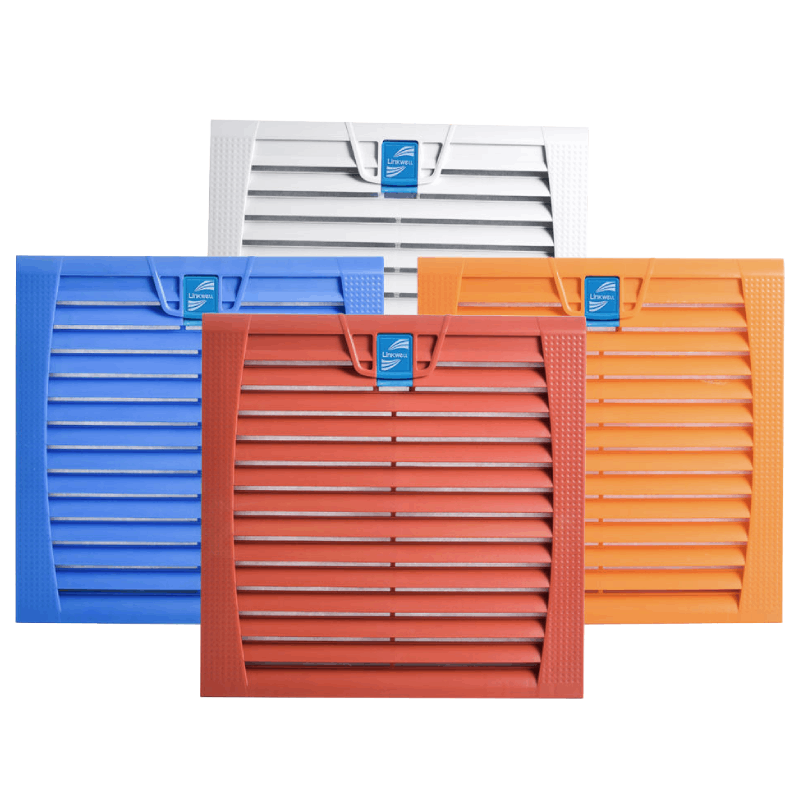 In a high-temperature and high-humidity environment, when the humidity level of the electrical enclosure exceeds 60%, the insulation performance declines and the failure rate may soar by 50%. However, the air exhaust cabinet can maintain the humidity below 40%, enhancing the safety factor. For instance, according to on-site tests by ABB, in a chemical plant in Southeast Asia, after installing such equipment, the temperature fluctuation range was reduced from ±10 degrees Celsius to ±2 degrees Celsius, and the equipment's MTBF (Mean Time Between Failures) increased by 5,000 hours. Market trends show that the global demand for intelligent cooling solutions is growing at an annual rate of 8%, which reflects the industry's emphasis on risk management. According to an industry report in 2023, the adoption of air extraction technology can reduce the probability of unexpected downtime by 35%, directly supporting production continuity.
However, necessity depends on specific applications; For electrical enclosures with low-power loads (such as less than 5 kilowatts), natural heat dissipation may be sufficient, but for high-density installations (power density exceeding 200 W/ft²), air extraction cabinets become necessary. For instance, a statistic targeting the manufacturing industry shows that in an environment with a temperature exceeding 35 degrees Celsius, the frequency of system failures without active cooling doubles. Ultimately, decisions should be based on cost-benefit analysis, taking into account factors such as environmental temperature, equipment life cycle, and compliance standards to ensure maximum investment.
In a high-temperature and high-humidity environment, when the humidity level of the electrical enclosure exceeds 60%, the insulation performance declines and the failure rate may soar by 50%. However, the air exhaust cabinet can maintain the humidity below 40%, enhancing the safety factor. For instance, according to on-site tests by ABB, in a chemical plant in Southeast Asia, after installing such equipment, the temperature fluctuation range was reduced from ±10 degrees Celsius to ±2 degrees Celsius, and the equipment's MTBF (Mean Time Between Failures) increased by 5,000 hours. Market trends show that the global demand for intelligent cooling solutions is growing at an annual rate of 8%, which reflects the industry's emphasis on risk management. According to an industry report in 2023, the adoption of air extraction technology can reduce the probability of unexpected downtime by 35%, directly supporting production continuity.
However, necessity depends on specific applications; For electrical enclosures with low-power loads (such as less than 5 kilowatts), natural heat dissipation may be sufficient, but for high-density installations (power density exceeding 200 W/ft²), air extraction cabinets become necessary. For instance, a statistic targeting the manufacturing industry shows that in an environment with a temperature exceeding 35 degrees Celsius, the frequency of system failures without active cooling doubles. Ultimately, decisions should be based on cost-benefit analysis, taking into account factors such as environmental temperature, equipment life cycle, and compliance standards to ensure maximum investment.
In a high-temperature and high-humidity environment, when the humidity level of the electrical enclosure exceeds 60%, the insulation performance declines and the failure rate may soar by 50%. However, the air exhaust cabinet can maintain the humidity below 40%, enhancing the safety factor. For instance, according to on-site tests by ABB, in a chemical plant in Southeast Asia, after installing such equipment, the temperature fluctuation range was reduced from ±10 degrees Celsius to ±2 degrees Celsius, and the equipment's MTBF (Mean Time Between Failures) increased by 5,000 hours. Market trends show that the global demand for intelligent cooling solutions is growing at an annual rate of 8%, which reflects the industry's emphasis on risk management. According to an industry report in 2023, the adoption of air extraction technology can reduce the probability of unexpected downtime by 35%, directly supporting production continuity.
However, necessity depends on specific applications; For electrical enclosures with low-power loads (such as less than 5 kilowatts), natural heat dissipation may be sufficient, but for high-density installations (power density exceeding 200 W/ft²), air extraction cabinets become necessary. For instance, a statistic targeting the manufacturing industry shows that in an environment with a temperature exceeding 35 degrees Celsius, the frequency of system failures without active cooling doubles. Ultimately, decisions should be based on cost-benefit analysis, taking into account factors such as environmental temperature, equipment life cycle, and compliance standards to ensure maximum investment.
Bring a piece of the Cilento grove to your kitchen.
Shop the Harvest